premodern design
This course covers the transformative period in graphic design from the Victorian era to the outbreak of World War I.
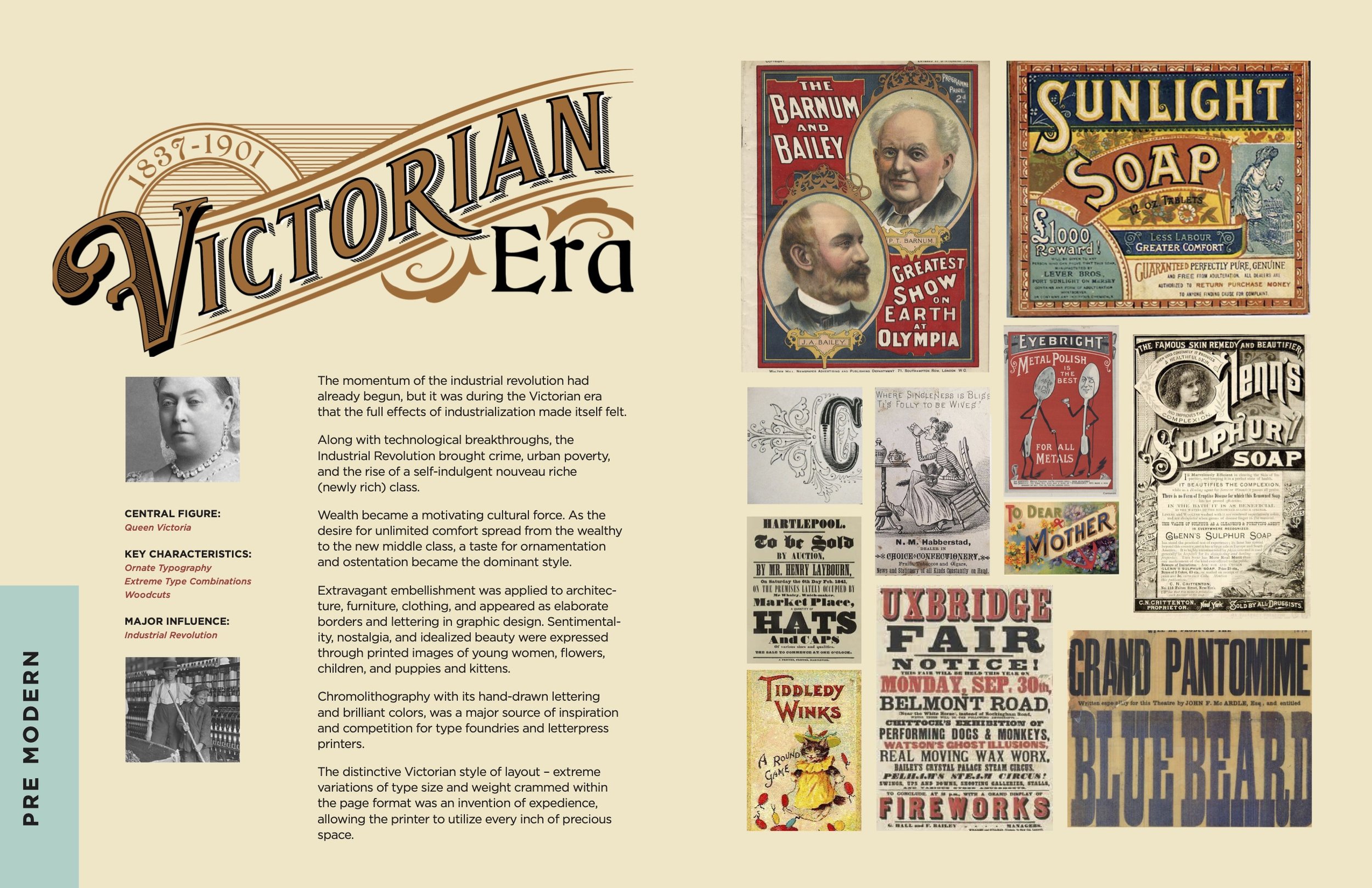
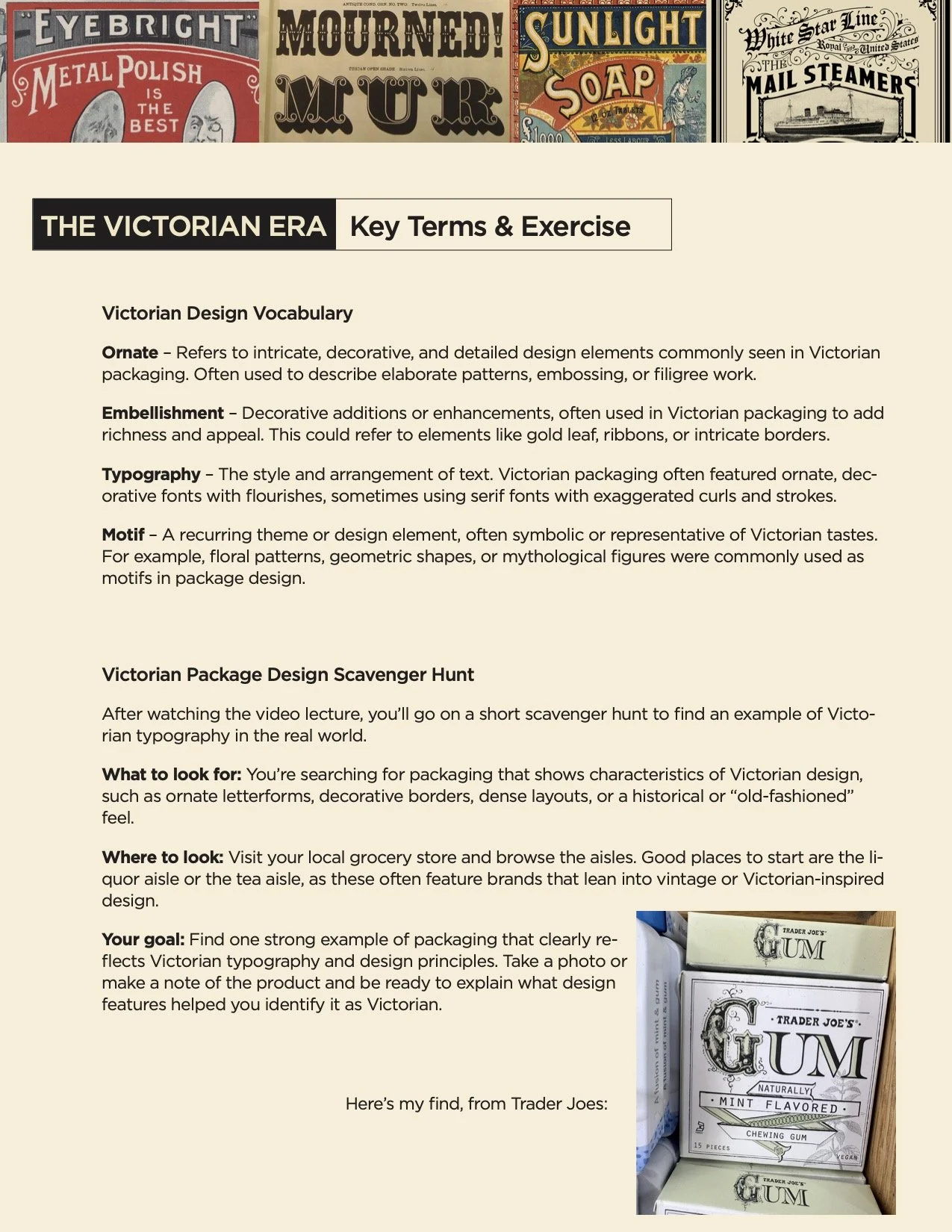
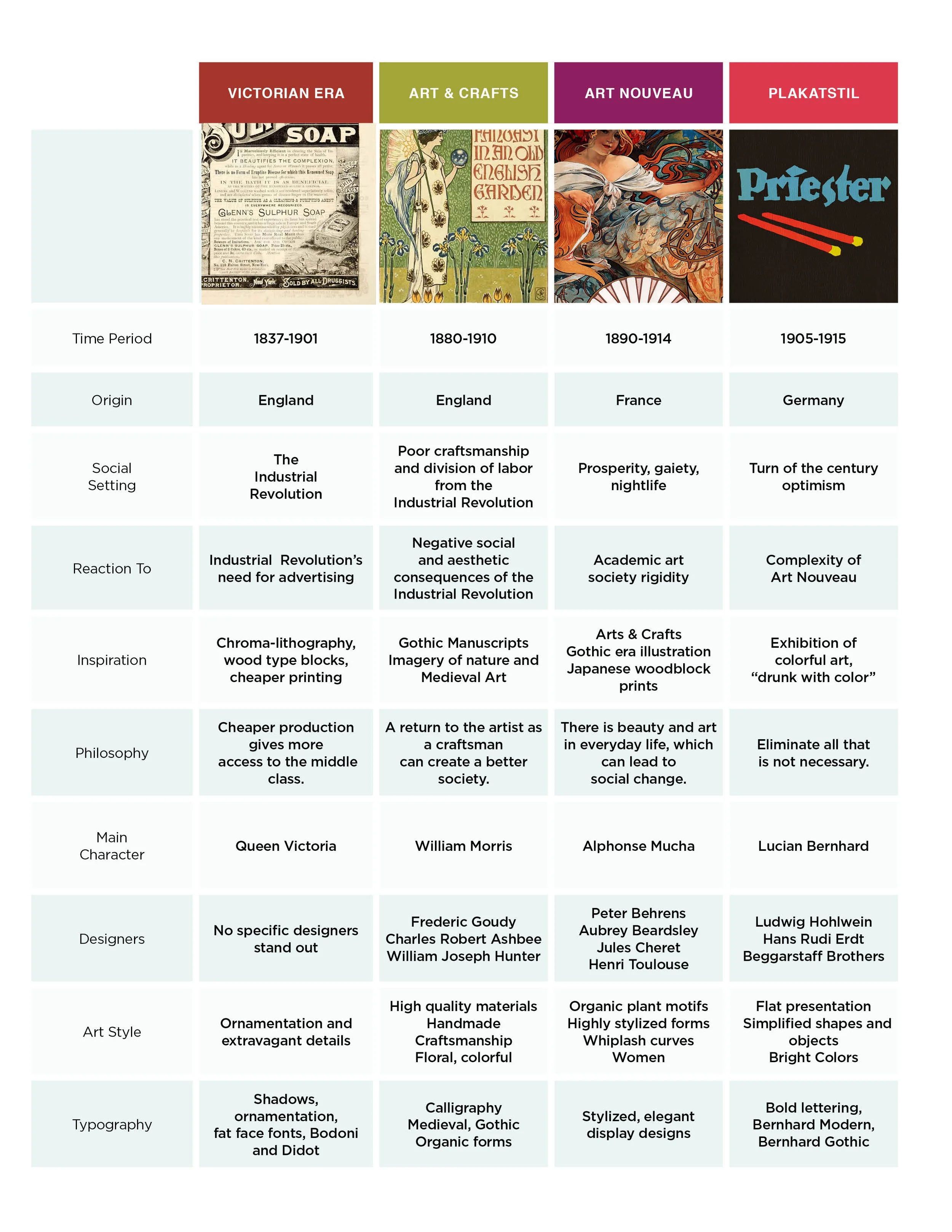
Fueled by the Industrial Revolution, design became more widely produced and consumed, with ornate typography, elaborate borders, and densely packed layouts defining the Victorian style.
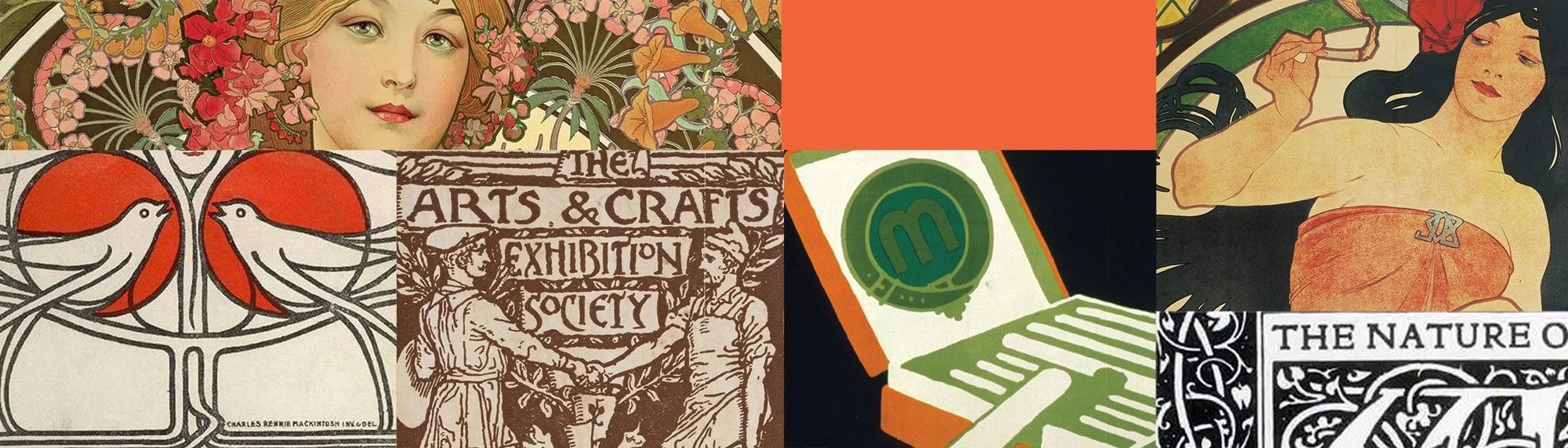
In response, the Arts and Crafts movement emerged, emphasizing craftsmanship and simplicity. Soon after, Art Nouveau introduced elegant, flowing lines and organic forms, blending art and design.
Each movement reflected changing values and technologies, setting the stage for modern design. This era laid the groundwork for the visual experimentation that would follow in the 20th century.
This course includes video lectures with examples, along with supporting PDFs to help you review and apply what you’ve learned.
-
-
The Victorian Era
Explore Victorian-era design during the Industrial Revolution—where ornament, mass production, and new printing techniques shaped bold, decorative styles that defined 19th-century visual culture.
Explore Victorian-era design during the Industrial Revolution—where ornament, mass production, and new printing techniques shaped bold, decorative styles that defined 19th-century visual culture.
-
-
-
The Arts and Crafts Movement
Discover the Arts and Crafts Movement and its response to industrialization, where designers championed craftsmanship, material honesty, and the value of the human hand.
Discover the Arts and Crafts Movement and its response to industrialization, where designers championed craftsmanship, material honesty, and the value of the human hand.
-
-
-
Art Nouveau
The Art Nouveau movement, when desingers embraced organic forms, flowing lines, and expressive typography, integrating ornament and image into unified compositions that blurred the line between fine art and applied design.
The Art Nouveau movement, when desingers embraced organic forms, flowing lines, and expressive typography, integrating ornament and image into unified compositions that blurred the line between fine art and applied design.
-
-
-
Plakatstil (Poster Style)
Learn about the Plakatstil poster style, a movement defined by the reduction of imagery and typography to their most essential forms. Using bold objects, flat color, and strong contrast, these posters communicate messages quickly and with striking clarity.
Learn about the Plakatstil poster style, a movement defined by the reduction of imagery and typography to their most essential forms. Using bold objects, flat color, and strong contrast, these posters communicate messages quickly and with striking clarity.
-
SUPPORT FOR YOUR LEARNING
Each lesson includes supportive learning materials.
Key Points + Visual Examples (Two-Page Spread)
A curated two-page spread that highlights the most important ideas from the lecture, alongside key visual examples. These pages are designed to allow you to build your own personal graphic design history reference book over time.
Key Terms and Exercise
A downloadable PDF with essential vocabulary and a short assignment. These exercises are designed to reinforce the concepts from the lecture and help you actively engage with the design movement.